The Swedish Research Council decided on 1 October to award a project grant to The Afterlives of Colonial Architecture: Field Stations for Decolonization. The project, which has been assigned 4.5 million, is led by Alessandro Petti, Professor of Architecture and Social Justice at the Royal Institute of Art. In total, the Swedish Research Council is allocating nearly 36 million kronor across eight institutions for the years 2027–2029.
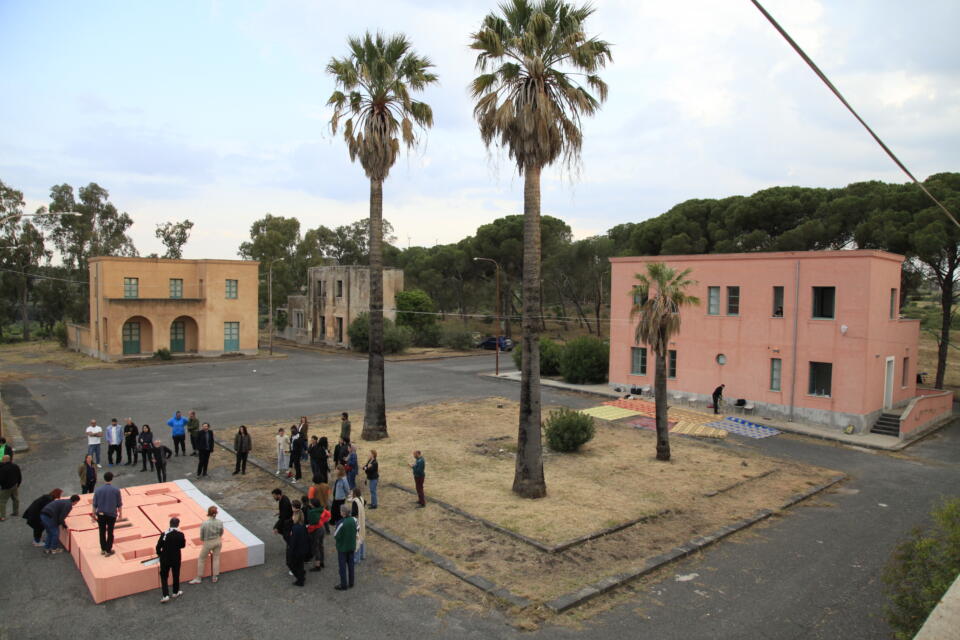
The Afterlives of Colonial Architecture: Field Stations for Decolonization examines how colonial and fascist architectures continue to structure contemporary life and how they can be transformed through situated artistic research. The project establishes the fascist rural village of Borgo Rizza in Sicily as a long-term Field Station for Difficult Heritage, where spatial interventions, collective study, and recurring public assemblies develop methods for the critical reuse of inherited forms.
From this site, the research extends through three transregional collaborations: with Tajarrod on Italian colonial settlements in Libya; with Sámi artistic and architectural networks, in collaboration with Joar Nango, on Indigenous spatial practices in Sápmi; and with Chimurenga on editorial and sonic infrastructures in South Africa. Together, these field stations create a comparative framework for developing profanation as a method of reuse and collective assembly as an artistic research practice.
The project approaches colonial and fascist architectures not as monuments to preserve or erase, but as sites for collective learning and public engagement. Through spatial experimentation, archival research, Indigenous knowledge, and editorial practice, it produces a research publication, a transregional atlas, and public activations. The project contributes new methodologies for working with difficult heritage within artistic research.
Read more about Alessandro Pettis and Decolonizing Architecture here.