| Kursen ges på engelska Kursplan: Decolonizing Architecture 30 hp (pdf) Application Instructions: Decolonizing Architecture 30 ects (pdf) Ansökningsperiod: 4 mars–15 april 2026 Sök kursen via länken här | |
For more than a decade, DAAS – Decolonizing Architecture Advanced Studies at the Royal Institute of Art in Stockholm – has developed the idea of the ’site as a method’ for research. This approach understands the site as a ground for knowledge production, where concepts emerge through practice and actions have lasting consequences. ’Site as method’ rejects the separation of theory from the conditions in which it takes shape and challenges the dominance of Western frameworks that claim universal validity. It values the knowledge embedded in lived experience, shared practices, and the minor gestures that shape everyday life.
Theme and course content
The final cycle of DAAS, participants will work with material that has been generated in the course over the previous years, where this material functions both as a living archive, collective memory, and a site in its own right. The course will activate research projects and conversations produced through a decade-long experiment in decolonial pedagogy and form new propositions and forms of transmission. As such, this year’s course places a particular emphasis on continuity and editing as participants will be invited to consider how their work contributes to a shared memory and how it may create conditions for future forms of practice beyond the academic frame.
The course is open to both previous DAAS participants and new applicants interested in editorial work, site as method, and collective modes of thinking. DAAS brings together practitioners working across disciplines, and applications are invited from those engaged in spatial practice, artistic research, writing, film and sound, archival or anthropological inquiry, infrastructural thinking, and pedagogical experimentation.
The course is situated within a political present in which questions of decoloniality cannot be treated as abstractions. DAAS engages with ongoing colonial conditions in Palestine, the afterlives of fascist architecture in Italy, and broader struggles against dispossession and structural violence. Site as method is understood here as a political and ethical position that demands attention to the material and historical forces shaping each context.
Many former DAAS participants remain connected to the sites and communities that shaped their research, and site-based work generates responsibilities that extend beyond the timeframe of the course. Employing conversation as a methodological framework, participants will cultivate extended dialogues with former cohorts, tracing intellectual trajectories, shared memories, and the ongoing development of projects initiated in previous years. A collective podcast produced throughout the course will function not only as an archive but as an active site for generating new ideas and engaging a wider public.
Course structure
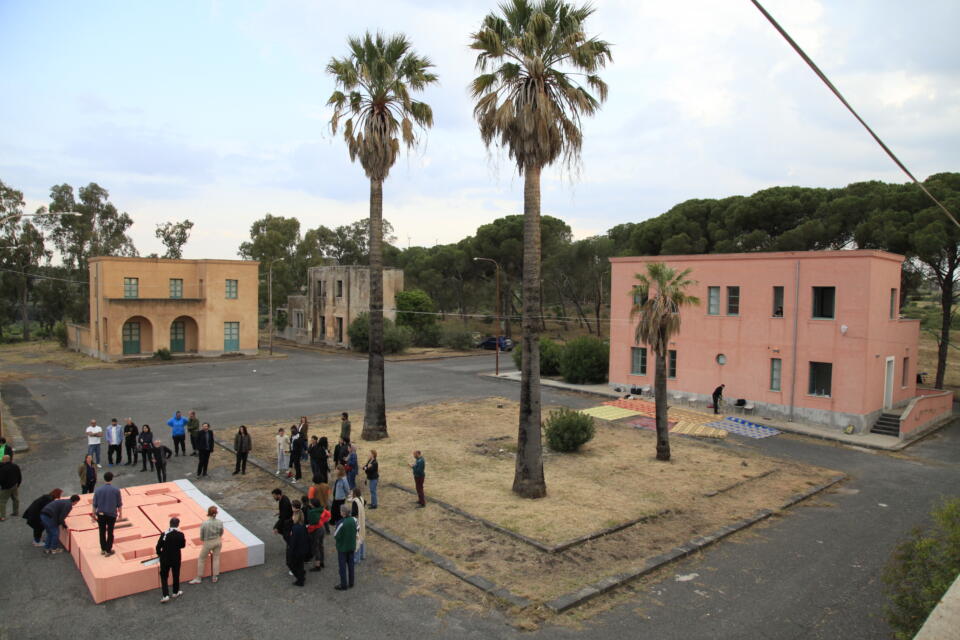
The course will begin with a study trip to Borgo EX in Sicily, where participants will collectively explore and rework diverse research trajectories. During the autumn, live interviews with former DAAS participants and invited guests will establish an exchange of practices and perspectives. The course will conclude with a final public presentation in Stockholm.
The course is composed of both weekly sessions together on site and self-studies in between these sessions.
| Credits | 30 ECTS (100%) |
| Level | Advanced level |
| Language | English |
| Entry Requirements | Master’s degree in Fine Art, Architecture, or another relevant field of study, alternatively prior experience equivalent to a Master’s degree in a relevant field together with 60 ECTS credits in “Decolonizing Architecture” at the Royal Institute of Art or corresponding knowledge acquired elsewhere. |
| Selection | The selection is based on the applicant’s letter of intent, as well as a draft proposal for a public presentation (publication and/or symposium) of a project treating the subject area “site as a method”. |
| Academic Year | Fall semester 2026, August 31st – January 17th |
| Responsible teacher | Alessandro Petti |
| Contact | alessandro.petti@kkh.se, studera.postmaster@kkh.se |